English
 русский
 عربى
عربىNews
Home / News / Industry News / How to Choose and Operate an Animal Feed Pellet Machine to Reduce Costs and Improve FCR

Content
Feed constitutes between 60 percent and 75 percent of total operational costs in intensive livestock and poultry farming. Managing feed conversion ratios and reducing physical losses directly dictates farm profitability. Unprocessed mash feeds suffer from high handling loss, selective feeding behavior, high dust content, and rapid microbial spoilage. Transitioning from raw mash formulas to dense, uniform pellets addresses these operational vulnerabilities.
The application of a specialized animal feed pellet machine introduces thermal, mechanical, and physical alterations to raw ingredients. Exposure to heat, moisture, and pressure during compaction gelatinizes starches, deactivates heat-sensitive antinutritional factors, and uncoils protein structures. These structural improvements increase enzymatic accessibility within the digestive tract, resulting in higher nutrient absorption per kilogram of feed consumed.
Beyond nutritional availability, physical integrity prevents ingredient separation during transport and storage. When animals consume loose mash, larger grains are selected preferentially, leaving essential micro-ingredients, vitamins, and minerals unconsumed at the bottom of the trough. Pelletized feed guarantees a uniform nutritional payload in every single bite, eliminating selective eating and minimizing systemic health variations within large herds or flocks.
Direct mechanical compression combined with saturated steam conditioning induces structural changes in feed matrix molecules. Starches within cereal grains transition from crystalline structures to amorphous gels through starch gelatinization. Gelatinized starch is significantly easier for pancreatic amylase to dismantle, yielding rapid glucose availability without stressing the animal's gastrointestinal apparatus.
Simultaneously, heat treatment reduces volatile antinutritional elements such as trypsin inhibitors in soybean meals. Uninhibited proteolytic enzyme action ensures protein fractions break down rapidly into absorbable amino acids. Improved protein bioavailability boosts cell proliferation, muscle tissue synthesis, and egg or milk yield depending on the target species.
Reduced basal metabolic energy expenditures represent another performance driver. Animals feeding on loose mash spend considerably more time standing, pecking, and searching at the feeding station. The continuous preening and head movement expend net energy that would otherwise turn into metabolic weight gain. Pelleted diet consumers spend up to 60 percent less time at the trough to ingest equivalent biomass, directly converting saved physical energy into improved feed conversion metrics.
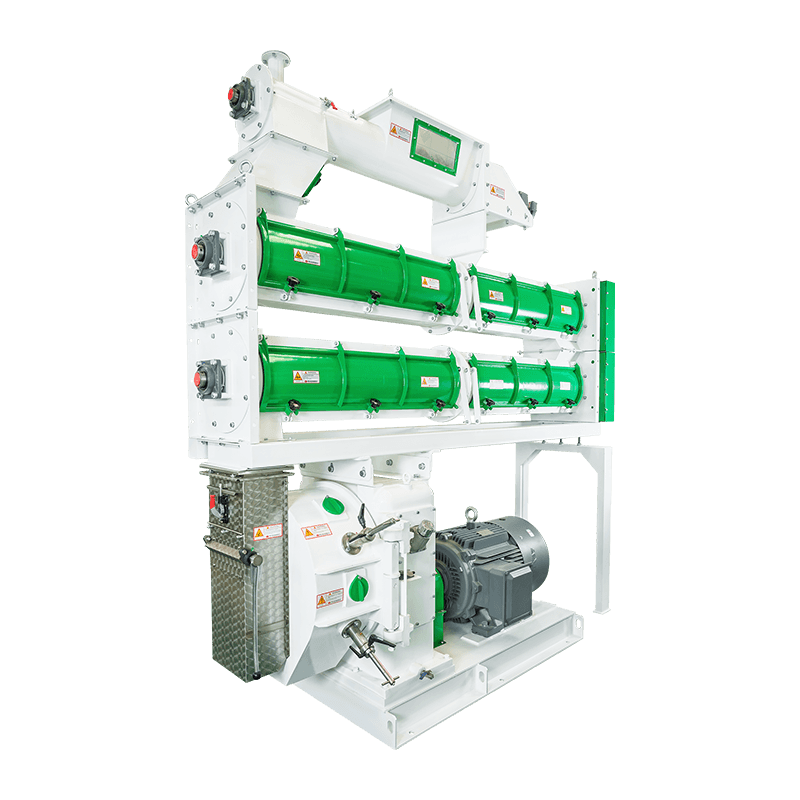
Selecting appropriate equipment depends heavily on target throughput, raw material matrix composition, and long-term production scales. The market offers two core physical structural formats for densification machinery: flat die configurations and ring die configurations.
Flat die units feature a horizontal stationary or rotating flat plate with vertical roller assemblies pressing downward. These systems offer mechanical simplicity, compact footprints, and straightforward maintenance routines. They excel in small to medium scale operations, farm-level home feed preparation, and processing fibrous or coarse raw materials with higher oil content flexibility.
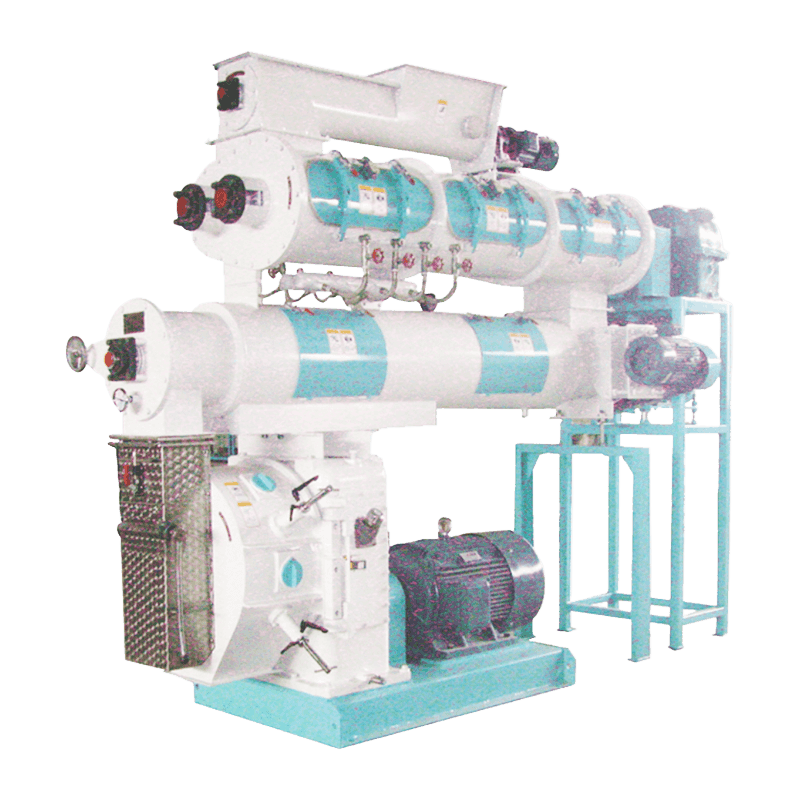
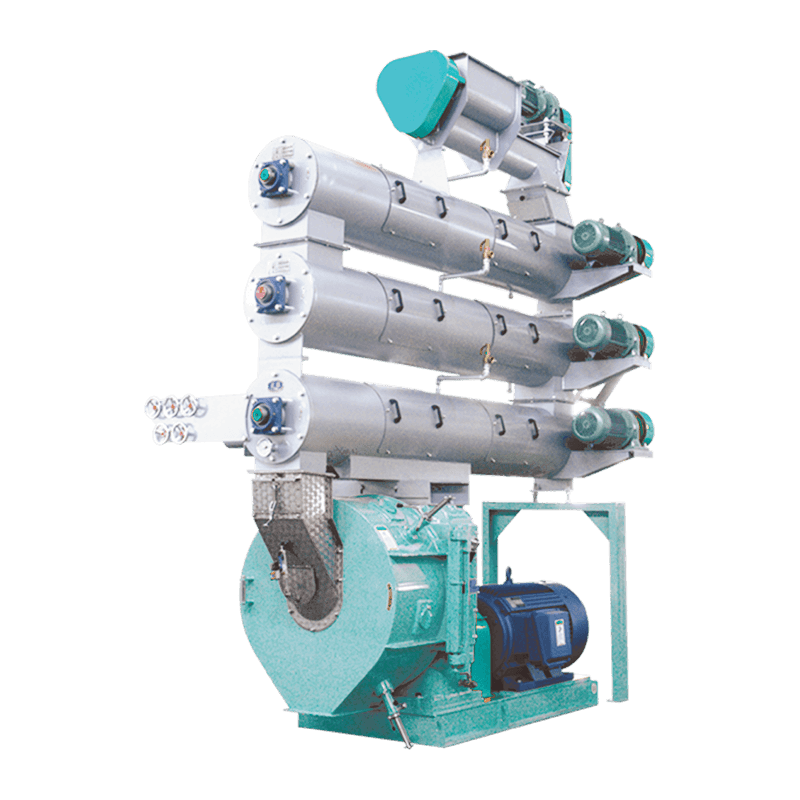
Ring die units feature a vertically mounted cylindrical die with internal counter-rotating roller shells. Ingredients enter the conditioning chamber, receive uniform steam injection, and spread across the interior circumference of the rotating ring die. The radial forces generated allow continuous high-volume output with exceptional physical density and low specific energy consumption per ton of finished product.
| Evaluation Parameter | Flat Die Configuration | Ring Die Configuration |
|---|---|---|
| Optimal Output Range | 50 kg/h to 1000 kg/h | 800 kg/h to over 20000 kg/h |
| Drive Transmission | Direct Gear Drive or V-Belt | Dual Belt or Gearbox Reduction |
| Conditioning Capabilities | Dry or Ambient Moisture Injection | Multi-pass Steam Conditioning |
| Power Consumption Ratio | 18 to 25 kWh per Ton | 10 to 16 kWh per Ton |
| Physical Machine Footprint | Compact, Low Clearance | Substantial Vertical Clearance Required |
| Capital Expenditure Level | Low to Moderate Initial Investment | Moderate to High Initial Investment |
| Wear Parts Replacement | Simple, Rapid Field Replacement | Requires Overhead Hoist / Alignment Equipment |
The mechanical performance of an animal feed pellet machine depends directly on the geometric configuration of its die mold channels. Choosing incorrect die dimensions results in soft, dusty pellets that crumble into fines during pneumatic transport, or causes severe machine blockages and thermal scorching of ingredients.
The two primary parameters governing die mold selection are hole diameter and compression ratio. Compression ratio is defined as the effective working length of the die channel divided by the nominal hole diameter. Higher compression ratios impart greater shear force and mechanical pressure, resulting in denser pellets with higher Durability Index scores.
Formulations with high starch levels expand under heat and pressure, requiring moderate compression ratios to yield solid structures. Conversely, high-protein formulations or diets containing elevated levels of fibrous raw materials require lower effective compression ratios or relieve countersinks to prevent internal channel clogging. Proper matching of raw material flow characteristics to die geometry reduces friction losses, extends component lifespan, and lowers electrical draw.
When changing raw material formulas from cereal-heavy matrices to fibrous agricultural residues, reduce the compression ratio by 10 to 15 percent to prevent severe die blockages and thermal degradation of protein components.
Achieving structural pellet durability and maximum nutritional availability requires structured control of the complete milling sequence. Skipping essential pre-processing steps leads to inconsistent pellet quality, high fines ratios, and premature mechanical wear.
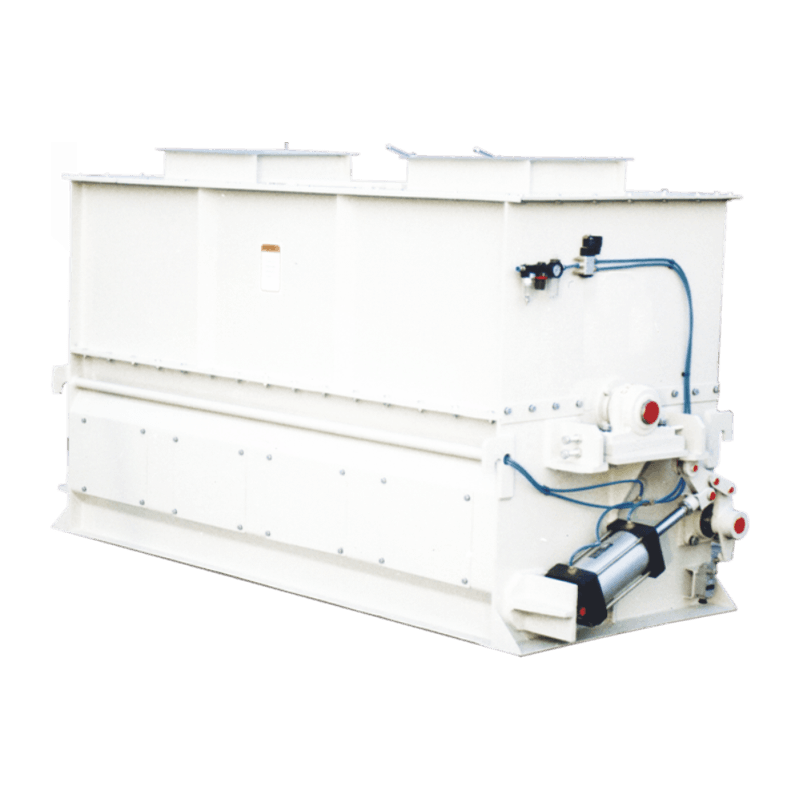
The sequence begins with particle size reduction using hammer mills or roller mills. Achieving a uniform geometric mean particle diameter between 400 microns and 600 microns optimizes surface area contact during steam conditioning. Ingredients then pass into the batch mixer to incorporate micro-ingredients evenly before reaching the thermal conditioning chamber.
Conditioning introduces dry saturated steam, raising temperature levels to between 75 degrees Celsius and 90 degrees Celsius while bringing target moisture content to roughly 15 to 17 percent. After passing through the extrusion die of the animal feed pellet machine, hot moist pellets enter counterflow coolers where ambient air brings temperature down to within 3 degrees Celsius of ambient levels, setting starch matrices and preserving physical structure.
Regular preventive maintenance minimizes unplanned machine downtime and avoids expensive die replacements. Tracking operating variables such as motor current draw, discharge temperature, and mechanical vibration identifies thermal stress or physical wear early.
Maintaining proper clearance between roller shells and die surfaces prevents unnecessary mechanical degradation. Setting gap clearance too wide increases fines percentages, elevates current draw, and lowers hourly throughput. Setting gap clearance too narrow causes direct metal-to-metal contact, leading to rapid die degradation and micro-fractures in roller bearings.
| Symptom Observed | Root Cause Analysis | Corrective Action Required |
|---|---|---|
| Low Pellet Durability Index (High Fines) | Insufficient steam temperature or improper gap settings | Increase steam pressure, adjust roller gap to 0.2 mm |
| Extrusion Die Clogging / Sudden Jamming | Excessive moisture or raw material moisture spikes | Shut off main feeder, clear channels, recalibrate steam valve |
| High Amperage Draw / Motor Overload | Excessive compression ratio or foreign metal contact | Check magnetic separator, replace die with suitable taper angle |
| Uneven Pellet Length Distribution | Worn cutter blades or incorrect knife placement | Sharpen or replace cutting knives, adjust clearance from die face |
| Surface Cracking on Extruded Pellets | Rapid cooling rates or over-milling particle sizing | Adjust cooling fan damper, widen hammer mill screen mesh size |
An animal feed pellet machine applies heat, steam, and mechanical pressure to feed raw materials. This process gelatinizes starches, improves protein bioavailability, and eliminates selective feeding behaviors. Animals consume balanced nutrients with less physical effort, direct converting consumed biomass into metabolic body weight gain.
Flat die machines utilize a horizontal stationary die plate suitable for small-scale operations and high-fiber mixtures. Ring die machines feature a vertical cylindrical die operating at high rotational speeds, designed for high-volume commercial production with superior energy efficiency per ton produced.
Compression ratio selection depends on raw material chemical makeup and target animal species. Starch-rich diets require higher compression ratios (1:8 to 1:10) to form dense structures, whereas high-protein or fibrous formulas require lower compression ratios (1:5 to 1:7) to prevent die channel blockages.
Steam conditioning adds controlled moisture and heat to raw mash before extrusion. Thermal energy softens grain particles, activates natural binders, gelatinizes starches, and destroys harmful biological pathogens without scorching protein fractions.
Roller clearance should be checked daily prior to initial start-up. Maintaining a target gap between 0.2 mm and 0.3 mm prevents excessive fines generation, avoids metal-to-metal contact wear, and ensures stable motor amperage draw under load.


 Previous