

 English
 русский
 عربى
Animal Feed Pellet Crumbler Suppliers

Product Category
Contact Us
Product Catalog
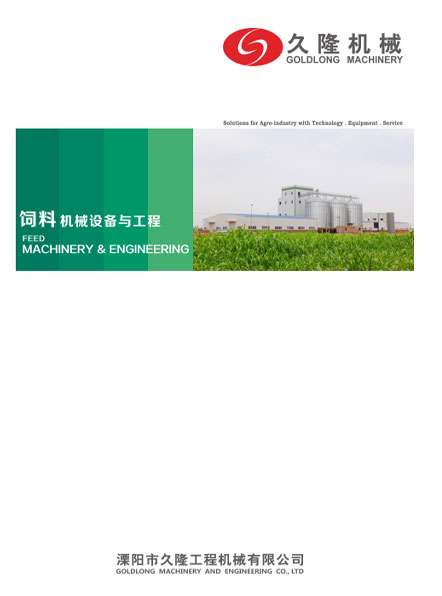
Custom Pellet Crumbler Machine Manufacturers
Crushing equipment uses mechanical force to break, pulverize, or reduce the particle size of large or medium-sized materials to meet the needs of subsequent processing, transportation, or use. There are various types of crushing equipment, including roller crushers, impact crushers, cone crushers, and hammer crushers. Each type of equipment has different working principles and applicable ranges based on material characteristics, hardness, and output requirements. This type of equipment plays a crucial role in material crushing efficiency, particle size uniformity, and energy consumption control, while also significantly impacting process optimization, production continuity, and equipment stability.


We provide comprehensive support including:
Service Item

Project Implementation
Scope 1
From initial requirement analysis and process design to equipment manufacturing, installation, and commissioning, we deliver full turnkey project solutions.
Our experienced project team ensures seamless coordination at every stage, enabling efficient execution and guaranteeing that each project is completed on schedule and operates reliably from day one.

After-Sales Service
Scope 2
We have a dedicated after-sales service team committed to supporting our customers throughout the entire lifecycle of the equipment.
Through regular follow-ups, remote diagnostics, and a rapid response mechanism, we promptly resolve operational issues and ensure stable, uninterrupted production.

Spare Parts Supply
Scope 3
Common wear parts and critical components are kept in stock for immediate dispatch.
This enables fast replacement and minimizes downtime, ensuring the continuous and efficient operation of your production line.

Training & Technical Support
Scope 4
We provide comprehensive operational training and maintenance guidance to help your team quickly master equipment operation and process optimization.
Our goal is to empower customers to achieve efficient and independent plant operation.

About Us
Focus·Innovation·Integrity
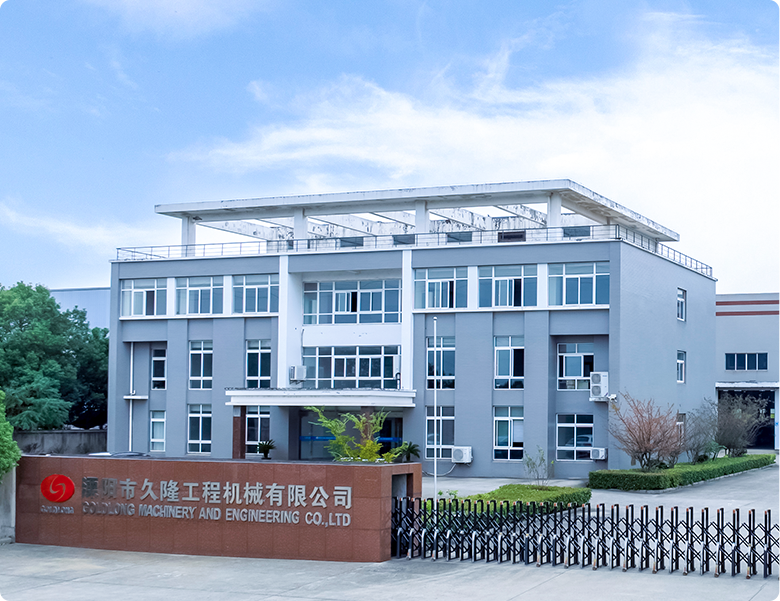
As one of the leading China custom Animal Feed Pellet Crumbler manufacturers and Pellet Crumbler Machine suppliers, Goldlong Machinery is specialized in feed machinery, grain dryer and compound fertilizer machinery, and provides the projects with turn-key basis, from design, engineering, manufacturing, installation, commissioning to after-sale service, and we also provide spare parts and the training for machinery operation, maintenance, technical support. In addition, we offer Pellet Crumbler for sale.
-

0㎡
Factory Area
-

0
Established In
-

0+
Employees
What’S News.
Pay Attention To Our
View All News
Pay Attention To Our
Latest News and Exhibitions
-
2026-10-29 Industry News
Factors Affecting Grain Drying Efficiency: Moisture, Airflow and Heat Balance
Learn More -
2026-10-22 Industry News
Common Pellet Cooler Problems and Solutions: Practical Applications, Selection
Learn More
Industry knowledge
Goldlong Machinery And Engineering Co., Ltd. designs and builds pellet crumbler machines for feed mills, aquafeed plants, and fertilizer processing lines that need to convert dense pellets into a controlled crumb structure. We are the Custom Pellet Crumbler Machine Manufacturers behind this Crumbler product family, supplying single machines or complete crumbling sections from our 14,000 m² manufacturing facility in Jiangsu, China.
Our range is built around two complementary configurations: the Three Roll Crumbler and the Double-Roll Crumbler. Both are engineered for continuous operation, adjustable particle size, low noise, and straightforward maintenance.
Our Crumbler Range and Application Fit
Three Roll Crumbler
The three-roll design uses synchronized rollers that apply uniform force across the pellet bed. Output particle size is adjustable through a mechanical or hydraulic gap system, and the welded steel body keeps vibration low. A protective cover and safety interlock are standard.
Double-Roll Crumbler
High-strength alloy steel rollers are precision machined and heat treated for long service life. The double-roll configuration provides stable particle sizing, fast gap adjustment, hydraulic protection against foreign objects, and an anti-clogging discharge path.
| Model | Roller configuration | Application fit | Typical line position |
|---|---|---|---|
| Three Roll Crumbler | Three synchronized rollers | Fine, uniform crumbling on small to medium lines; feed, fertilizer, chemical, and mineral applications | After cooler or dryer, directly before the rotary sifter |
| Double-Roll Crumbler | Two high-strength alloy rollers | Higher-throughput crumbling of medium-hard, brittle pellets on continuous production lines | After cooler or dryer, before final grading and packing |
Process and Application Fit
In a feed mill, the crumbler softens pellets that are too hard for young animals or for certain aquatic feeds. It converts whole pellets into a crumb with a defined granule distribution, which improves feed intake and reduces waste. The machine is positioned after the pellet mill and cooler, and before the rotary sifter removes fines and oversized particles.
We size the crumbler according to the upstream pellet line and the target crumb specification. The same machine family is used in fertilizer granulation and chemical processing where a controlled reduction in particle size is required without producing excessive fines.
Material, Capacity, and Critical Specifications
Selection starts with the material. Pellet diameter, hardness, moisture, fat content, and bulk density determine roll force, gap setting, and drive power. For abrasive feed ingredients and fertilizer materials, the roller shell material becomes the key reliability factor.
- Target particle size and acceptable fines ratio
- Rated throughput in tonnes per hour
- Pellet diameter range and hardness
- Moisture and fat or oil content
- Roller gap adjustment range and method: manual, mechanical, or hydraulic
- Protection requirements: hydraulic overload release, anti-jam, and safety interlock
Capacity is not solely a function of motor power. Roll width, roll speed, surface condition, and material flow characteristics all affect the result. Our proposal defines the operating point and the spare parts that should be held in stock.
Configuration, Controls, and Automation Integration
We supply crumbler machines with the control and monitoring level that matches your line. For simple installations, a local starter panel with manual gap adjustment is sufficient. For automated feed mills, we can integrate the crumbler into the line control system so that gap, motor load, and material flow are monitored continuously.
- Motorized or hydraulic gap adjustment for remote control
- Hydraulic protection system to release when foreign objects enter the rolls
- Safety interlock and protective cover for operator protection
- Interface with upstream cooler discharge and downstream rotary sifter
- Optional variable-speed feeding to stabilize material bed depth
Because we manufacture the surrounding process equipment, we can supply matching transition hoppers, support structures, and conveyors as part of the same scope.
Quality Assurance, Installation, and Acceptance
Our manufacturing facility is run under ERP management to control workshop operations and maintain stable product quality. Before shipment, each crumbler is inspected for performance, stability, safety, and full-system operation. Our R&D and engineering teams can also develop or modify machines based on customer drawings or samples.
On turnkey projects, we handle installation, commissioning, and operator training. The commissioning phase includes gap setting, no-load and load operation, and verification of particle size. After acceptance, our after-sales team provides remote diagnostics, rapid spare parts dispatch, and regular follow-up. Common wear items such as the Roller Shell and roller assembly are stocked for quick replacement.
Information We Use to Configure Your Solution
To prepare a precise configuration and quotation, we need the operating parameters of your line and the crumb specification you want to achieve. The list below is the starting point for every crumbler proposal.
- Product type and target crumb size or granule distribution
- Required capacity in tonnes per hour
- Pellet diameter, hardness, moisture, and fat content
- Upstream equipment: pellet mill, cooler, and conveying arrangement
- Downstream equipment: rotary sifter, packing, or bagging
- Available electrical supply and control interface
- Space constraints, installation height, and supporting structure
- Operating hours, maintenance strategy, and required spare parts
- Export packaging, delivery, and documentation requirements
With these details, we provide a proposal that includes the recommended crumbler model, roller configuration, motor power, gap adjustment system, dimensions, and the spare parts package.
Frequently Asked Questions
What is the difference between the Three Roll and Double-Roll Crumbler?
The three-roll machine spreads the reduction over a longer crushing path and is preferred when a very uniform, fine crumb is needed on small to medium lines. The double-roll machine handles higher throughputs and harder, brittle pellets with a compact footprint and fast gap adjustment.
Can the crumbler be integrated into an existing feed milling line?
Yes. We size the machine to match the cooler discharge and sifter inlet already installed in your plant, and we can supply transition hoppers, support frames, and the control interface. Send us the existing line layout and we will confirm the integration points.
How is crumb particle size controlled?
The roller gap is adjusted manually, mechanically, or hydraulically depending on the configuration. We set the operating gap range based on your target granule size and provide guidance on how to monitor the result during production.
What spare parts should we keep in stock?
The primary wear items are the roller shell and roller assembly. We keep common wear parts and critical components in stock so replacements can be dispatched quickly and downtime kept to a minimum.
Do you provide installation and commissioning?
Yes. On turnkey projects we provide installation, commissioning, operator training, and maintenance guidance. After acceptance, our after-sales team supports you through remote diagnostics, regular follow-up, and spare parts supply.
-
Quick Links
Home Product Center About GOLDLONG Solutions News Contact Us -
Prducts Categories
Pellet Mill Hammer Mill Mixer Extruder Pre-Cleaner Cooler Crumbler Rotary Sifter Oil and Liquid Adding System Bucket Elevator and Conveyor Other Auxiliary Spare Parts -
Contact Us
+86-13915884315+86-519-87987889
No.19, Binhe Rd, Tianmuhu Dev't Zone, Liyang City, Jiangsu, China -
Ready to Get Started?
Get in Touch Now!
-
Copyright © 2025 by Goldlong Machinery And Engineering Co., Ltd. All Rights Reserved.Custom Pellet Crumbler Suppliers

