

 English
 русский
 عربى
عربىNews
Content
- 1 Why Particle Size Starts With the Grinder
- 2 How a Hammer Mill Feed Grinder Works
- 3 Screen Mesh Size Selection: Matching Holes to the Animal
- 4 Particle Size, Uniformity and Digestibility
- 5 Power Consumption and Energy Efficiency
- 6 Hammer Blade Durability and Maintenance
- 7 Troubleshooting Common Grinding Problems
- 8 Frequently Asked Questions
Why Particle Size Starts With the Grinder
Every ration begins with a particle size decision. Whole grain passes through the gut only partly broken down, so starch, protein and fibre stay locked inside tough seed coats. A well-set hammer mill feed grinder opens those barriers, exposes more surface to digestive enzymes and gives the mixer a consistent meal. Trials on poultry and swine often show that moving from coarse to well-ground cereal improves feed conversion by 2 to 6%, a large gain for one mechanical step.
Finer is not always better. Over-grinding wastes electricity, creates dust, heats the meal and can cause stomach ulcers in pigs or weaken gizzard function in birds. The real goal is a target particle size with a narrow spread. The tools are screen selection, rotor speed, hammer condition, airflow and feed rate, and this guide covers each one with practical numbers.
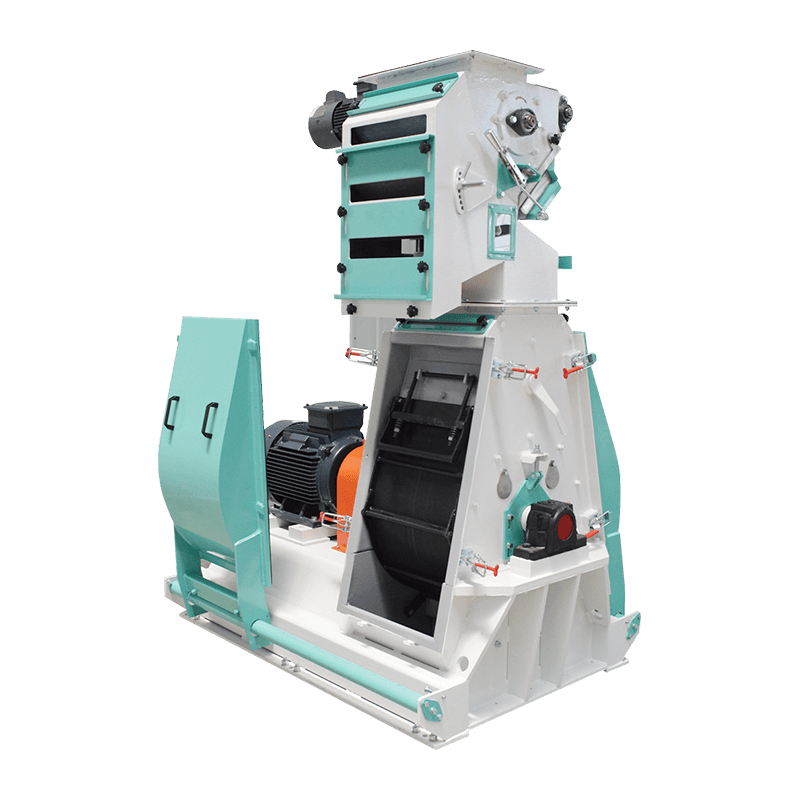
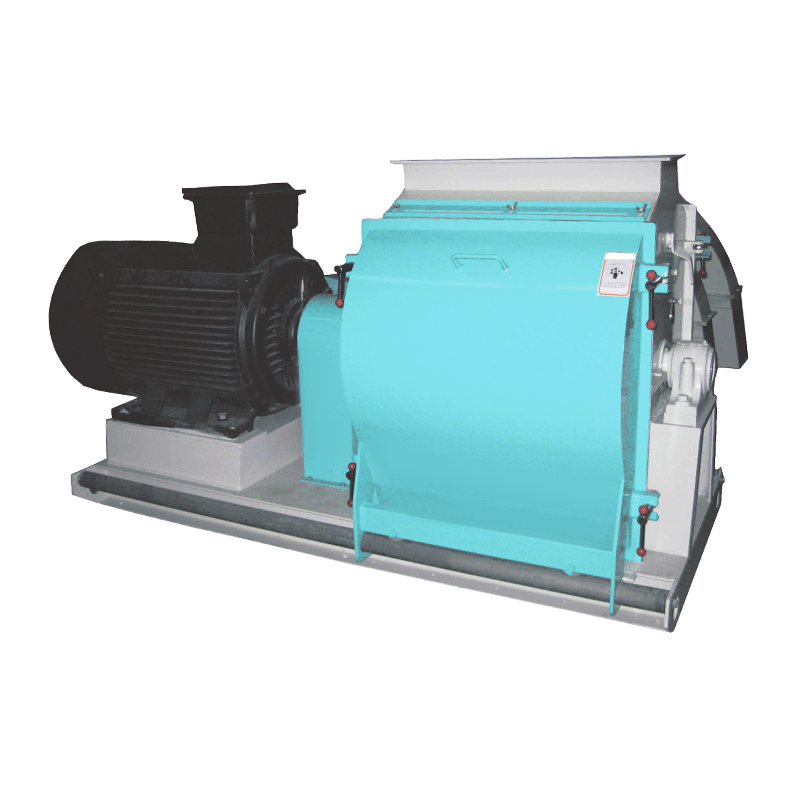
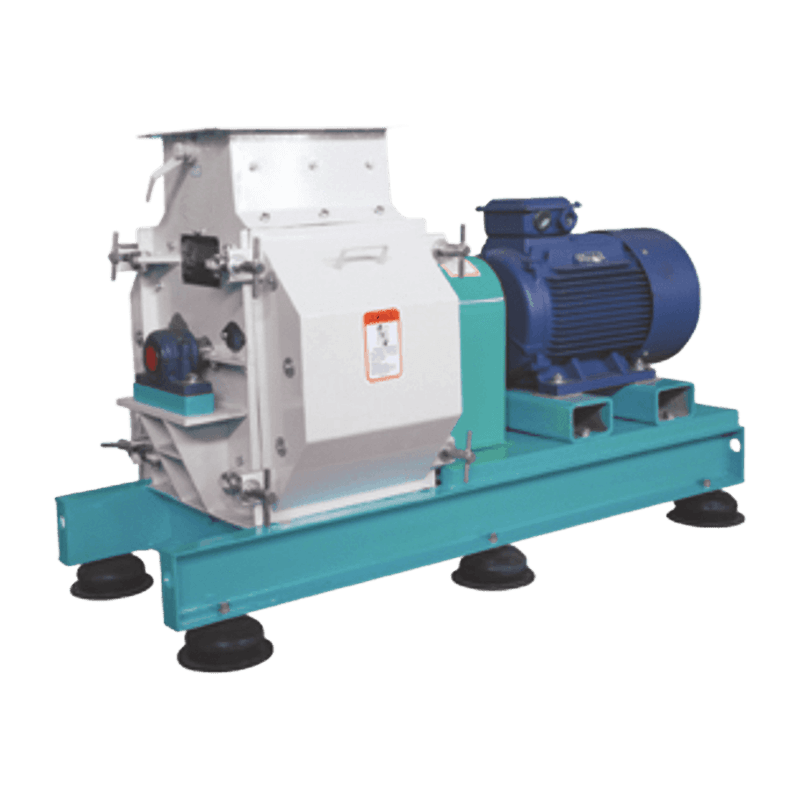 A hammer mill feed grinder is the first machine that shapes ration quality.
2 to 6%Typical feed conversion gain from proper grinding
500 to 900 micronsCommon mean size target for pig and poultry diets
8 to 20 kWhTypical grinding energy per ton, set mainly by screen size
How a Hammer Mill Feed Grinder Works
Inside the grinding chamber of a hammer mill, a rotor spins a set of swinging hammers at high speed. Grain falls into the chamber, is struck repeatedly by the hammer tips, then hits the wall and screen until it is small enough to leave through the holes. Oversize material stays inside and keeps getting hit. That loop is why the screen is the main gatekeeper of particle size, while rotor speed and hammer condition decide how efficiently the loop runs.
Typical grinding line from intake to mixer.
Grinding Chamber Basics
Hammers hang on rods between rotor discs and swing outward under centrifugal force. Tip speed commonly falls between 60 and 90 meters per second. Faster tips break hard kernels such as corn and sorghum more easily, but they also raise power draw and wear. Soft materials such as oats can run slower without losing fineness. The main parts are:
- Rotor and hammers: deliver the impact energy.
- Screen: sets the maximum particle size.
- Feeder: keeps the load steady.
- Aspiration: pulls air through the screen and removes heat.
- Magnet: protects hammers from tramp metal.
Feeding and Airflow
A steady feed rate matters more than most operators expect. Surges overload the motor and push coarse material through, while starving the chamber wastes power on empty swings. Good aspiration lowers meal temperature, prevents moisture condensation and keeps fines moving out. Blocked filters or a leaking duct can reduce capacity by double digits, so check airflow before blaming the screen or the hammers.
Screen Mesh Size Selection: Matching Holes to the Animal
Screen choice is the biggest single lever in grinding. Holes set the upper limit of particle size, and the mean particle size is usually a fraction of the hole diameter, often one third to one half, depending on grain hardness and moisture. When you choose a screen for a grain grinder, begin with species and age group, then confirm the result with a sieve test.
Young animals need finer meal than ruminants.
Young animals have less developed digestive systems, so they need finer meal. Ruminants tolerate and even benefit from coarser material that supports rumen function.
Reading the Screen Specification
Hole diameter is only part of the story. Open area, the share of the screen surface that is actually hole, controls how fast ground material can leave the chamber. High open area raises throughput and lowers heat, but thin screens flex and wear faster. Round holes give the tightest spread, while slotted or hexagonal patterns raise capacity at the cost of a few oversize particles.
| Animal group | Screen hole (mm) | Target mean size (microns) | Main reason |
|---|---|---|---|
| Weaner pigs | 2.0 to 3.0 | 400 to 500 | Starch digestibility |
| Broilers | 2.5 to 3.5 | 600 to 800 | Gizzard function |
| Laying hens | 3.0 to 4.0 | 700 to 900 | Gizzard and shell quality |
| Finisher pigs | 3.5 to 4.5 | 600 to 700 | Conversion versus stomach health |
| Dairy cattle | 5.0 to 6.0 | 1500 to 2500 | Rumen health |
A Simple Selection Routine
- Define the target mean particle size for the species and age.
- Start with a screen whose holes are two to three times the target mean.
- Run 15 minutes at a steady feed rate and take a sample.
- Sieve the sample and check both the mean and the spread.
- Change one variable at a time, either screen or rotor speed, never both.
Particle Size, Uniformity and Digestibility
Smaller particles expose more surface, so enzymes reach starch and protein faster and nutrients are absorbed earlier in the gut. The benefit has limits. Birds need some structure to keep the gizzard active, pigs develop ulcers on very fine meal, and ruminants need long fibre. The best particle size is the one that balances digestibility, throughput and animal health.
Fine screens favor digestibility, coarse screens favor energy and dust control.
The radar chart shows why a medium screen is the usual starting point. It balances every axis, while fine and coarse screens each win on some axes and lose on others.
Uniformity is as valuable as average size. Two meals with the same mean can behave very differently if one carries a wide spread of fines and oversize particles.
Measuring Uniformity
Use a sieve shaker with a stack of standard sieves, weigh what each sieve retains, and calculate the geometric mean diameter and its spread. A spread value below about 2.0 is often considered good. Test at least once per shift when changing grain lots, because moisture and hardness shift results quickly.
- Too many fines reduce palatability and pelleting quality.
- Oversize particles leave the animal undigested.
- Wide size gaps cause segregation in the mixer and feeder.
Digestibility Gains in Practice
Field studies on finishing pigs commonly report that lowering the mean size of corn by 100 microns improves feed efficiency by about 1 to 1.5%, until the meal becomes too fine. In poultry, a moderately coarse and uniform meal often supports better gizzard development and nutrient use than a very fine one. Always trial a change on one pen before switching the whole plant.
Power Consumption and Energy Efficiency
Energy is the largest running cost of grinding after labor. Specific energy, the kilowatt hours used per ton, climbs steeply as the screen gets smaller, because material must be struck many more times before it escapes. Moving from a 6 mm to a 2 mm screen can raise energy use by two to three times for the same grain.
Energy per ton falls quickly as the screen opens up.
Ways to Lower Specific Energy
- Run the motor at 85 to 95% of rated current with an automatic feeder.
- Choose the coarsest screen that still meets the particle target.
- Keep hammer edges sharp and the screen gap correct.
- Pre-clean grain so stones and fibre lumps do not stall the rotor.
- Avoid running empty, since idle rotors still draw power.
- Keep aspiration filters clean to cut recirculation of fines.
Over time, tracking kilowatt hours per ton on a simple log reveals problems early. A slow rise at the same screen and grain usually points to worn hammers or a blocked airflow path, not a motor fault.
Hammer Blade Durability and Maintenance
Hammers wear through abrasion from silica in grain and through repeated impact. As edges round off, the gap to the screen grows, fewer kernels shatter on each pass, and the mill needs more time and power to reach the same fineness. Wear is gradual, so output often slips for weeks before anyone notices.
Illustrative loss of throughput as hammer edges round off.
Materials and Hardness
Hammers are usually made from hardened alloy steel. Carbide-tipped types can last several times longer on abrasive grain, but cost more and can chip if tramp metal gets through. Choose by cost per ton ground, not by price per hammer. Abrasive husks and dirty grain favor harder tips, while clean soft grain does fine with standard steel.
A Practical Maintenance Routine
- Inspect hammers weekly and measure edge rounding with a simple gauge.
- Turn or reverse hammers when the first working edge is worn, to use every corner.
- Replace complete sets and weigh them so rotor balance stays within a few grams.
- Check the gap between hammer tips and screen, commonly 6 to 10 mm.
- Inspect screens for dents, cracks and enlarged holes each week.
- Lubricate bearings on schedule and clean the magnet every shift.
Wide access doors shorten hammer inspection and turning time.Unbalanced hammer sets are a quiet cause of bearing failure. Weigh and match sets before every installation.
Troubleshooting Common Grinding Problems
Most grinding issues trace back to a short list of causes. Use the table below as a quick first check before changing the screen or calling for service.
| Symptom | Likely cause | Action |
|---|---|---|
| Meal too coarse | Worn hammers or torn screen | Turn hammers, replace screen |
| Excess fines and dust | Screen too fine, low airflow | Open screen, clear filters |
| High motor load | Feed surge, damp grain | Adjust feeder, dry grain |
| Heavy vibration | Unbalanced hammer set | Weigh and rematch set |
| Low throughput | Blocked screen holes | Clean screen, check air path |
Frequently Asked Questions
Q1: What screen size should I start with for poultry feed?
Most plants start between 2.5 and 3.5 mm for broilers and slightly larger for layers. Run a sieve test, check gizzard health and adjust in small steps.
Q2: How often should hammers be turned or replaced?
Inspect weekly. Turn hammers when the working edge is clearly rounded, often every few hundred operating hours on abrasive grain. Replace the whole set when all corners are worn.
Q3: Does finer grinding always improve digestibility?
No. Gains slow as particles shrink, and very fine meal can cause ulcers in pigs, weak gizzard use in birds, dust losses and higher energy cost. Target a balanced size with a narrow spread.
Q4: How can I reduce power use without losing quality?
Use the coarsest screen that meets the target, keep the feed rate steady, maintain sharp hammers and keep airflow paths clean. Logging kilowatt hours per ton helps you spot drift early.
Q5: How do I check particle uniformity at the plant?
Use a sieve shaker and a stack of standard sieves, weigh each fraction and compare the mean and spread against your target. Test at each grain lot change and after any screen or hammer change.
 Previous