

 English
 русский
 عربى
Rotary Screening Machine Suppliers

Product Category
Contact Us
Product Catalog
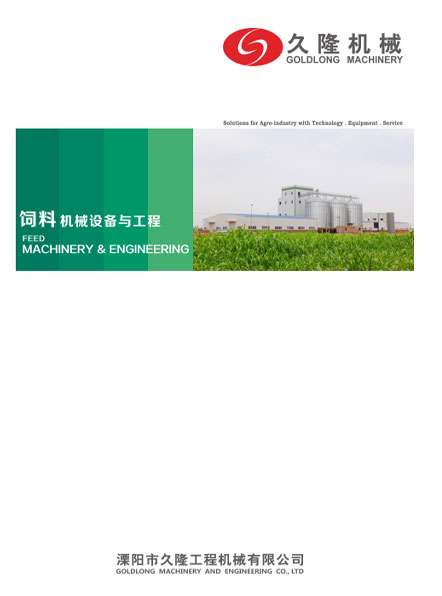
Custom Rotary Sifter Machine Manufacturers
Screening equipment is mainly used for grading, screening, and impurity removal of granular materials. This equipment comes in various structures, including rotary grading screens, vibrating screens, drum screens, and linear screens, enabling efficient and precise screening based on the particle size, moisture content, and characteristics of the materials. Screening equipment improves raw material processing efficiency and product uniformity, effectively reducing equipment wear and energy consumption in subsequent production processes. The equipment design emphasizes ease of operation, convenient maintenance, and structural stability, meeting the needs of continuous and automated production. It is a crucial guarantee for improving production quality and ensuring smooth process flows. This equipment is widely used in various industries such as feed, grain, chemicals, mining, and building materials.


We provide comprehensive support including:
Service Item

Project Implementation
Scope 1
From initial requirement analysis and process design to equipment manufacturing, installation, and commissioning, we deliver full turnkey project solutions.
Our experienced project team ensures seamless coordination at every stage, enabling efficient execution and guaranteeing that each project is completed on schedule and operates reliably from day one.

After-Sales Service
Scope 2
We have a dedicated after-sales service team committed to supporting our customers throughout the entire lifecycle of the equipment.
Through regular follow-ups, remote diagnostics, and a rapid response mechanism, we promptly resolve operational issues and ensure stable, uninterrupted production.

Spare Parts Supply
Scope 3
Common wear parts and critical components are kept in stock for immediate dispatch.
This enables fast replacement and minimizes downtime, ensuring the continuous and efficient operation of your production line.

Training & Technical Support
Scope 4
We provide comprehensive operational training and maintenance guidance to help your team quickly master equipment operation and process optimization.
Our goal is to empower customers to achieve efficient and independent plant operation.

About Us
Focus·Innovation·Integrity
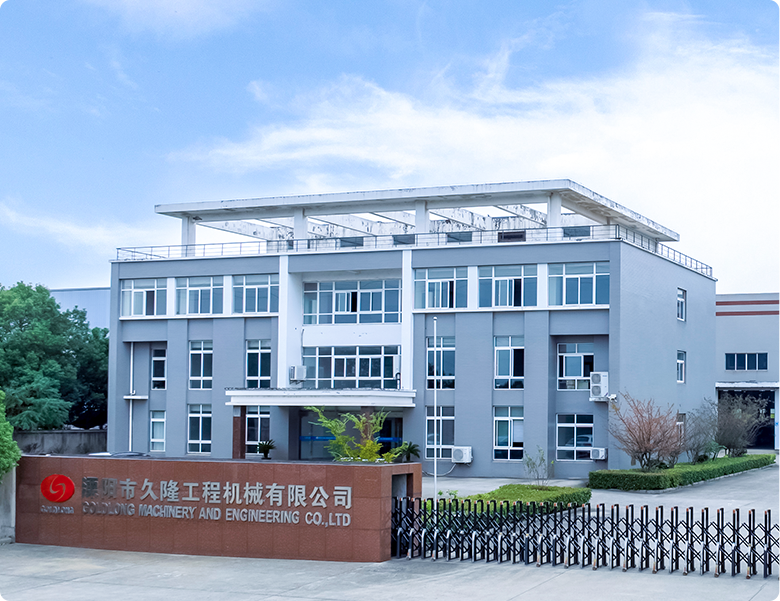
As one of the leading China custom Rotary Screening Machine manufacturers and Rotary Sifter Machine suppliers, Goldlong Machinery is specialized in feed machinery, grain dryer and compound fertilizer machinery, and provides the projects with turn-key basis, from design, engineering, manufacturing, installation, commissioning to after-sale service, and we also provide spare parts and the training for machinery operation, maintenance, technical support. In addition, we offer Pellet Screener for sale.
-

0㎡
Factory Area
-

0
Established In
-

0+
Employees
What’S News.
Pay Attention To Our
View All News
Pay Attention To Our
Latest News and Exhibitions
-
2026-10-29 Industry News
Factors Affecting Grain Drying Efficiency: Moisture, Airflow and Heat Balance
Learn More -
2026-10-22 Industry News
Common Pellet Cooler Problems and Solutions: Practical Applications, Selection
Learn More
Industry knowledge
Goldlong Rotary Sifters for Process Screening
Goldlong Machinery And Engineering Co., Ltd. designs and manufactures rotary screening equipment for feed mills, grain processors, fertilizer plants and biomass lines. As Custom Rotary Sifter Machine Manufacturers, we supply the SFJH Series rotary sifter family and back it with turnkey engineering, from process design and machine fabrication to installation, commissioning, training and spare parts supply.
Our own 14,000 m² factory in Liyang, Jiangsu, gives us direct control over fabrication and quality inspection, while our project team engineers the surrounding process equipment so the sifter operates as part of the whole line. Browse the Product Center for related equipment such as hammer mills, mixers, pellet mills, coolers and conveyors.
The SFJH Series Rotary Sifter Range
The SFJH Series is our standard rotary sifter product family. It uses a belt driving system, adjustable screen layer and mesh, and a balance system with polymer nylon board that helps maintain stable amplitude during rotary operation. The screen system is designed for flexible operation, with less trouble and lower maintenance than more complex screen mechanisms.
| Model | Output (t/h) | Power (kW) | Typical Application |
|---|---|---|---|
| SFJH80×2c | 2-6 | 1.5 | Premix, small batch and finished pellet screening |
| SFJH110×2c | 4-8 | 2.2 | Poultry feed and finished pellet screening |
| SFJH130×2c | 8-12 | 4 | Mash grading and grain cleaning |
| SFJH140×2c | 10-16 | 5.5 | Medium capacity feed plants |
| SFJH153×2c | 12-20 | 5.5 | Large pellet mills and high-throughput lines |
Rated output depends on mesh size, moisture, bulk density and the separation requirements of each product. During the proposal stage we select the model from actual throughput data rather than from line nameplate capacity alone. Detailed specifications for each machine are listed on the SFJH Series Rotary Sifter product page.
Where the Rotary Sifter Fits in Your Plant
In feed and aquafeed production, the rotary sifter is normally installed after the cooler and crumbler and before packing, where it removes fines and oversized pellets from the final product. It is also used for raw ingredient cleaning before grinding or for grading mash before pelleting. The same screening principle applies to grain, chemical, mining and building material processes where granular products need classification.
Our Pellet Mill, hammer mill, mixer, cooler, crumbler and conveying equipment are supplied as part of the same process design, so screening is matched to the particle size distribution coming from upstream equipment.
- Finished pellet screening: remove dust and fines before packaging or coating.
- Crumbler classification: separate target crumble size from oversize returns.
- Raw material cleaning: reject oversize impurities and foreign material.
- Special granule grading: classify extruded, coated or moisture-sensitive granules.
Material and Screen Selection
Screening performance depends on particle shape, moisture, bulk density and the percentage of near-size particles in the feed. Fine or high-moisture powders can blind the screen, while elongated pellets require careful opening selection to pass the desired product and reject oversize.
When preparing a proposal, we use your material specification and separation target to define mesh opening, number of screen layers and screen area. If a representative sample or particle size analysis is available, it improves the accuracy of the capacity rating.
Configuration and Automation Integration
The SFJH Series is built with belt drive and a flexible screen system, making it straightforward to adapt as recipes change. For new projects, we integrate the sifter into the plant control system with correct start/stop sequencing and interlocking with upstream and downstream equipment. For existing lines, we confirm connection dimensions, available headroom and control points so installation causes minimal disruption.
In a full turnkey scope, our engineers handle the electrical control design and commissioning together with the mechanical installation, giving your operators a single point of responsibility.
Quality Assurance and Project Support
All SFJH sifters are manufactured in our own factory under ERP-managed workshop control. Before shipment, each machine undergoes comprehensive inspection covering performance, stability, safety and full system testing.
- Turnkey project implementation from requirement analysis and process design to installation and commissioning.
- Dedicated after-sales team with regular follow-ups, remote diagnostics and 24-hour rapid response support.
- Stock of common wear parts and critical components for quick dispatch.
- Operator training and maintenance guidance to help your team run the equipment independently.
We have delivered machinery and turnkey projects to Russia, Romania, Indonesia, New Zealand, the Philippines, Bangladesh, Pakistan, Iran, Syria, Jordan, Saudi Arabia and Sudan, and we support projects across Europe, Asia and Africa.
Information We Use to Configure Your Solution
To prepare a practical configuration and quotation, we need the following project information:
- Material: type, bulk density, moisture content and particle size distribution.
- Duty: throughput in t/h, screening purpose and target separation point.
- Screen requirements: number of layers, mesh opening or product size range.
- Line context: upstream and downstream equipment, inlet/outlet heights and existing conveying.
- Controls: available voltage/frequency and control system interface.
- Site: indoor/outdoor location, dust extraction and operator access.
With these points, we prepare a proposal that includes the selected model, motor power, screen configuration, connection dimensions and the integration method.
Frequently Asked Questions
Q: What does the SFJH Series rotary sifter do?
A: It screens, grades and removes impurities from granular or pelleted materials. Typical duties include finished pellet screening, crumble classification, raw material cleaning and final product grading.
Q: What throughput can the SFJH Series handle?
A: Standard models range from 2 to 20 t/h depending on material and screen selection. We choose the model based on your required duty and confirm effective capacity during proposal preparation.
Q: Can screen layers and mesh be changed?
A: Yes. The SFJH Series has adjustable screen layer and mesh, so the same machine can be configured for different target particle sizes or reconfigured when the product recipe changes.
Q: Do you provide installation, commissioning and training?
A: Yes. We provide turnkey project support from design and manufacturing through installation, commissioning, operator training and maintenance guidance.
Q: Which regions do you export to?
A: Our machinery and turnkey projects have been delivered to Europe, Asia, Africa and other regions, including Russia, Romania, Indonesia, New Zealand, the Philippines, Bangladesh, Pakistan, Iran, Syria, Jordan, Saudi Arabia and Sudan.
-
Quick Links
Home Product Center About GOLDLONG Solutions News Contact Us -
Prducts Categories
Pellet Mill Hammer Mill Mixer Extruder Pre-Cleaner Cooler Crumbler Rotary Sifter Oil and Liquid Adding System Bucket Elevator and Conveyor Other Auxiliary Spare Parts -
Contact Us
+86-13915884315+86-519-87987889
No.19, Binhe Rd, Tianmuhu Dev't Zone, Liyang City, Jiangsu, China -
Ready to Get Started?
Get in Touch Now!
-
Copyright © 2025 by Goldlong Machinery And Engineering Co., Ltd. All Rights Reserved.Custom Pellet Screener Suppliers

