Content
- 1 Why Cooler Problems Usually Start Upstream
- 2 Problem 1: Pellets Arrive Warm at the Discharge
- 3 Problem 2: Pellets Feel Cool but Moisture Comes Back
- 4 Problem 3: The Bed Blocks, Bridges, or Leaks at Shutdown
- 5 Problem 4: Uneven Cooling, Broken Pellets, and Fines
- 6 A Five-Step Diagnostic Order That Saves Time
- 7 Maintenance That Prevents Repeat Failures
- 8 Repair, Retrofit, or Replace?
- 9 Frequently Asked Questions
- 10 Getting the Cooling Stage Right at the Design Stage
A cooler can look perfectly healthy on the control screen and still be the reason your silos sweat, your crumbler plugs, or your bagging line loses weight accuracy. The complaints are always similar: pellets arrive warm at the discharge, moisture comes back after cooling, the bed blocks, or fines go up. The conclusion first: in most plants the cooler itself is not the problem. Airflow, retention time, and the moisture handed over by the pellet mill decide the result.
Use these four numbers as a first check before you change any setting. They are typical starting points for counterflow cooling of compound feed, not universal constants. Small aqua pellets and high-fat recipes behave differently.
Why Cooler Problems Usually Start Upstream
Three upstream conditions change the cooling load more than any damper position:
- Die wear and recipe shifts. Denser, fattier pellets hold heat longer, so the retention time that worked last quarter now leaves the discharge too warm.
- Moisture added at the conditioner. Every extra point of water has to leave through the cooler. Mash entering at 17% will not become a 12% pellet without pulling fines out of the bed as well.
- Ambient humidity and duct layout. Saturated cooling air lowers temperature but adds moisture back to the pellet surface, and a cooler sharing a duct header with hammer mills inherits pressure swings hour by hour.
Fix the input before you touch the fan. If pellets leave the die hot, wet, or soft, the cooler is doing damage control, not cooling.
Problem 1: Pellets Arrive Warm at the Discharge
This is the most reported issue, and in most mills the fan is running with normal motor current. The usual culprit is false air drawn in before the fan — air that never passes through the bed.
Check in this order
- Suction-side duct joints, flexible connections, inspection doors, and expansion joints. A strip of paper finds leaks faster than a gauge.
- Fan rotation direction, belt tension, and impeller wear. A backward-running or slipping fan still moves air, so it sounds normal but delivers far less volume.
- Damper and VFD position against the commissioning record, not against what the last shift left behind.
- Bed depth against the manual, and actual throughput against rated capacity. Running 12 t/h through a 10 t/h cooler removes retention time that no amount of airflow recovers.
If the air volume is genuinely short — after a capacity upgrade, or with a fan originally sized for a lighter pellet — compare the fan curve with the static pressure of the installed ducting before changing motors or impellers.
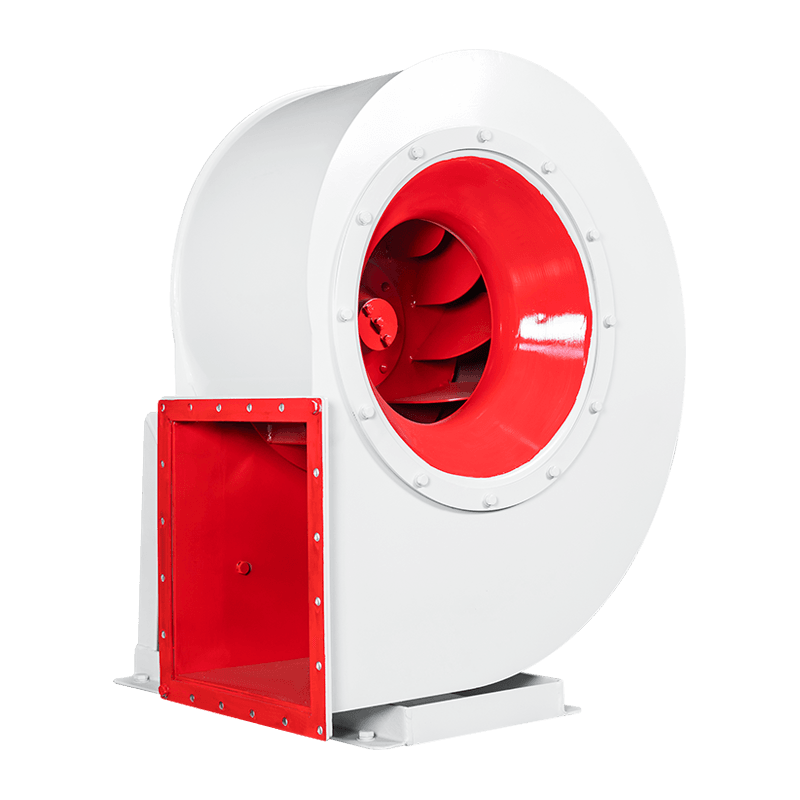
Fan for Feed, Grain Dryer, and Fertilizer MachineryReview this auxiliary fan when airflow through existing ducting is limited and before changing motors or impellers on cooling lines.View Product →Problem 2: Pellets Feel Cool but Moisture Comes Back
Operators describe it as “the pellets look fine, but the silo sweats”. A pellet leaving the cooler at ambient temperature and 13.5% moisture releases vapour as it equalizes in the bin, and that vapour condenses on cool silo walls. Caking, mould patches, and bridging at the outlet follow.
- Cooling removes heat faster than it removes moisture, so a pellet can be cool and still above the storage limit.
- Humid cooling air raises relative humidity inside the bed, and the top layer re-absorbs water during the last minutes of cooling.
- Warm product in a cold silo drives moisture migration from the core to the wall.
What to do
- Take a grab sample, seal it, and measure moisture after 30 minutes. Panel readouts and wall probes mislead.
- Target 11.5-12.5% final moisture for compound feed going into long storage, and tighten the range in hot, humid climates.
- Reduce moisture at the conditioner instead of pushing more humid air through the bed.
- Increase retention time slightly and lower airflow when ambient relative humidity is high, and keep exhaust ducts and filters clean so the air inside the cooler stays drier.
Problem 3: The Bed Blocks, Bridges, or Leaks at Shutdown
Blocking appears as a falling discharge rate, a rising bed level, or a current spike on the discharge drive. The causes repeat:
- Bed depth set too high for the pellet size; small aqua pellets bridge far more readily than 4 mm poultry pellets.
- Discharge gate or flap worn or out of adjustment, so the bed is pulled unevenly from one side.
- Soft, sticky pellets from over-conditioning, high fat inclusion, or a cold die.
- Foreign material such as string, die fragments, or a stray bolt trapped in the bed.
- Hardened sealing strips letting product leak after shutdown and compact into a layer that dries solid.
Short term, reduce feed rate and lower bed depth one step, then clear the discharge area. Longer term, re-set the gate, replace the seals, and confirm that the crumbler is not the real obstruction.
Problem 4: Uneven Cooling, Broken Pellets, and Fines
Uneven cooling almost always shows up as fines. One side of the bed runs hot, the crumbler breaks the softer side into dust, and the bagging line reports weight variation and dust in the air.
- Air leaking between cooling chambers or around side plates, so one section sees more air than another.
- A distributor that feeds the bed unevenly, or product arriving in surges.
- Crumbler roll gap worn or set too tight; dents in the rolls crush the same spot on every rotation.
- Excessive free-fall after the cooler, or pneumatic conveying grinding the product on the way to the bins.
Level the distributor, check the discharge gate across its full width, and set the crumbler gap as a starting point at roughly half to two-thirds of the pellet diameter. Replace worn roll shells rather than re-cutting them. Where a line switches between crumbs and pellets several times a day, a three-roll crumbler with a re-circulation path delivers a more even crumble and fewer fines than a single-pass two-roll unit.
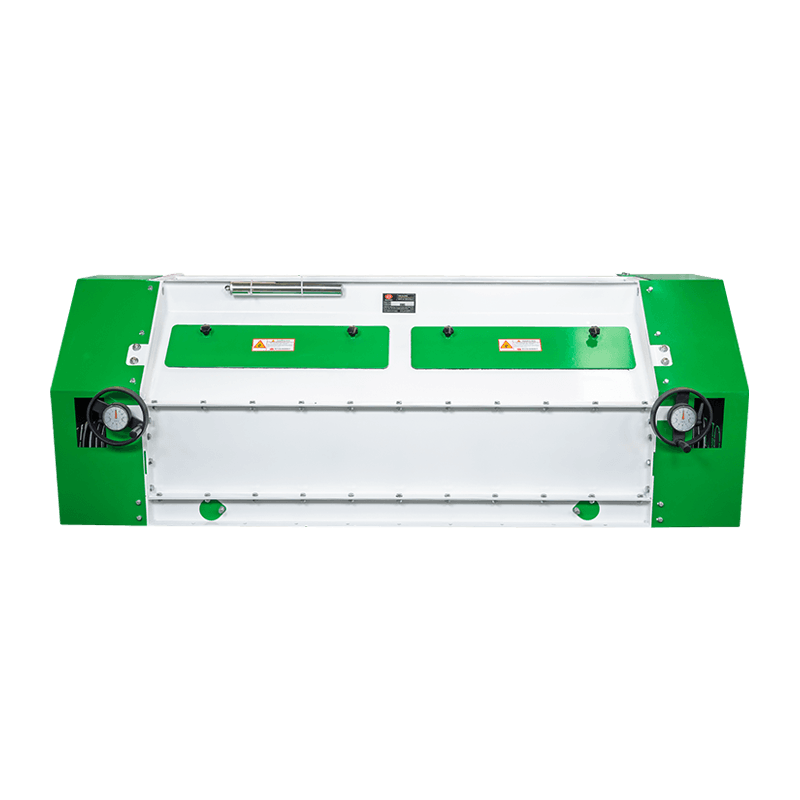
Three Roll Crumbler for Feed and Fertilizer LinesA synchronous three-roll design with adjustable gap and wear-resistant components for continuous crushing, suitable when lines need uniform crumble and fewer fines.View Product →A Five-Step Diagnostic Order That Saves Time
- Sample the product. Take pellets at the discharge, seal them, and measure temperature and moisture once they settle. Compare mash moisture in against pellet moisture out.
- Compare airflow with design: fan current against nameplate, damper and VFD against the commissioning sheet, static pressure across the bed.
- Hunt for false air on every suction-side joint, door, seal, and flange before adjusting anything.
- Confirm the mechanical side: bed depth, distributor level, discharge gate, crumbler gap, sealing strips.
- Change one variable at a time and record the result. Airflow, retention time, and moisture interact, so three simultaneous changes tell you nothing.
Maintenance That Prevents Repeat Failures
- Every shift: record discharge temperature and moisture, watch the bed level indicator, and clear the hopper.
- Weekly: inspect door and duct seals, check belt tension and fan mounting bolts, and read filter differential pressure.
- Monthly: verify discharge gate setting, roll shells, bed plates, VFD, and damper positions against the commissioning record.
- Seasonally: inspect duct insulation and drainage before the rainy season, replace filter bags based on differential pressure rather than the calendar, and stock the spares that stop a line — seals, bearings, roll shells, V-belts, filter bags.
Repair, Retrofit, or Replace?
Three tests keep this decision objective:
- Repair when the cooler still reaches ambient +5 °C at rated capacity and the fault is a single component: a seal, gate, pulley, or roll shell.
- Retrofit when the body and bed are sound but the air system is not. A correctly sized fan, sealed ducting, a clean filter, and proper instrumentation often recover 10-15% of cooling capacity.
- Replace when the body is corroded, bed plates are warped, leaks between chambers cannot be sealed, or the unit is more than 20-25% short of the air volume that today’s capacity needs.
Counterflow and horizontal coolers fail differently
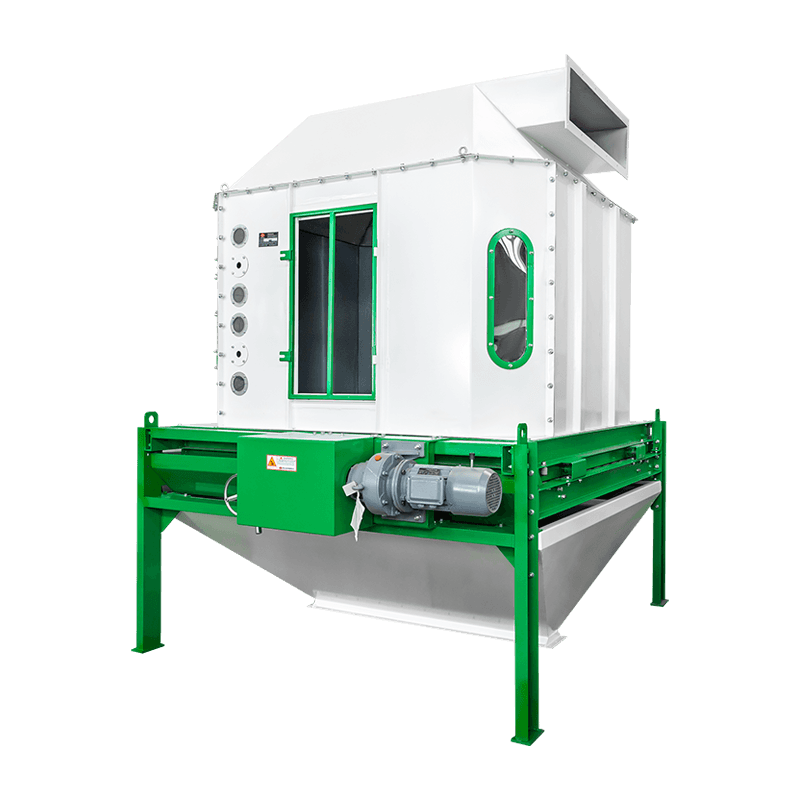
Counterflow coolers, where incoming cool air meets outgoing hot pellets, fail mainly on airflow and false air. Horizontal belt coolers give fragile aqua and pet pellets a longer, gentler residence time, but they bridge and block more often with sticky or high-moisture product and depend on even spreading across the belt width.
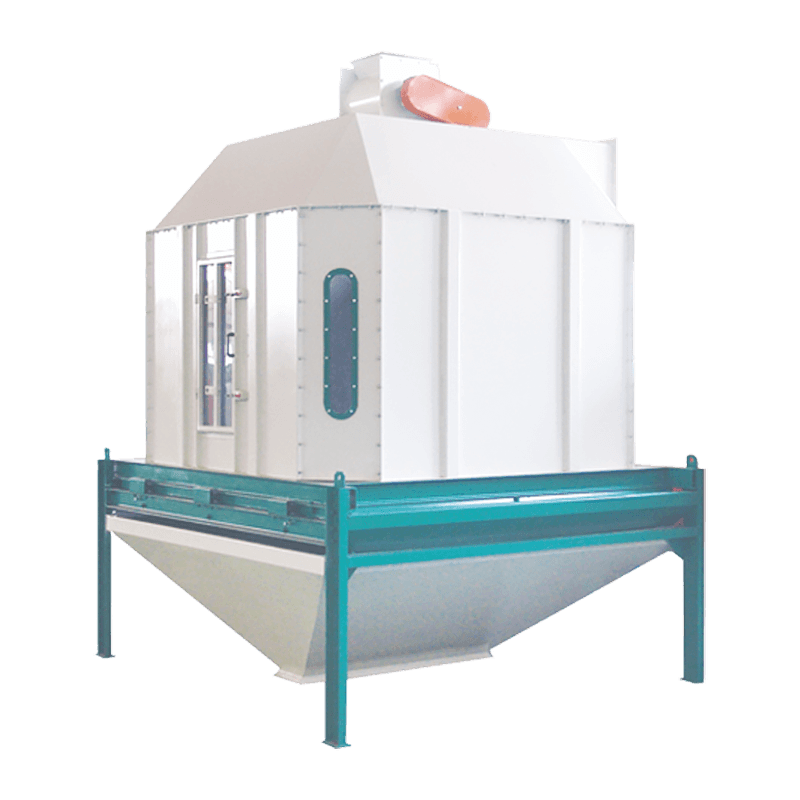
SKLN Series Counter-flow Cooler for Pellet CoolingCounter-current design cools hot, humid pellets without sudden chilling, with models from 1–30 t/h and discharge within 3–5°C of ambient.View Product →Frequently Asked Questions
Q1: How cool should pellets be before storage?
Within 3-5 °C of ambient air, and never more than 5 °C above it on a line running at design capacity. Warmer pellets drive moisture migration in a cool silo, and that is where caking and mould begin.
Q2: What is the single most common cause of poor cooling?
False air on the suction side of the fan. It cuts the volume that actually crosses the bed, and it stays invisible on the control screen.
Q3: Does more airflow always mean better cooling?
No. Beyond the design point, extra air increases dust carry-over and fines, and in humid weather it adds moisture back into the pellet surface instead of removing it.
Getting the Cooling Stage Right at the Design Stage
Cooling capacity is cheaper to specify correctly than to patch later. Size the cooler against the recipe range — pellet diameter, fat level, incoming moisture — and against the ambient conditions of the plant, not just the tonnage on the nameplate. On turnkey lines, cooling is specified together with conditioning, conveying, dust collection, and storage so that nothing downstream inherits a humidity problem.
If your cooler is running at the edge of its capacity after a recipe or throughput change, it is worth reviewing the whole line rather than the cooler alone. Our animal feed processing solutions treat cooling, crumbling, conveying, and storage as one system. Send us the discharge temperature, moisture, and throughput figures you are seeing now through the contact page, and we can tell you which of the failures above your data points to.

English
русский
عربى