English
 русский
 عربى
News
Home / News / Industry News / Factors Affecting Grain Drying Efficiency: Moisture, Airflow and Heat Balance

Content
Move one tonne of grain from 22% moisture down to 13%, and about 103.5 kg of water has to leave the kernel before it is safe to store. That figure is fixed. How long the job takes and how much fuel it burns is not: the same dryer can finish in six hours on a dry afternoon and need twelve after a wet front rolls through.
Drying efficiency is the ratio between water removed and energy spent, and it is decided by four groups of variables — the grain, the air, the dryer design and the operator. Get the first two wrong and no hardware upgrade rescues the fuel bill.
When a dryer underperforms, check these five items before touching the burner:
The first two items can double fuel use between a dry season and a wet one. The last is usually worth a free 5-15% once it is tightened up.
Every extra point of starting moisture raises the water load, the residence time and the fuel demand together, and each point is harder than the last. Free surface water leaves quickly; moisture bound inside the starch matrix needs longer contact with hot air.
The table shows the load building, measured as kilograms of water removed per tonne of wet grain dried to 13%.
| Starting moisture (w.b.) | Water removed per tonne | Relative drying load |
|---|---|---|
| 18% | 57.5 kg | 0.56 |
| 20% | 80.5 kg | 0.78 |
| 22% | 103.5 kg | 1.00 |
| 25% | 137.9 kg | 1.33 |
Two conclusions follow. Delaying harvest so grain dries in the field is often the cheapest "dryer" available, as long as weather risk stays acceptable. And the step from 13% to 12% removes about 10 kg of water and 10 kg of sellable weight per tonne — you pay once in fuel and again in shrink.
A batch averaging 20% may hold kernels between 16% and 26%. The dryer runs until the wettest kernels reach target, so the driest are already over-dried. Variation also changes how air moves through the bed, opening wet and dry channels.
Grain type shifts the drying curve more than most operators expect. Kernel size, shape, test weight, hull cover and starch-to-protein ratio all affect how quickly water migrates to the surface. Higher moisture generally improves thermal conductivity early in the cycle, but the outer layers dry and shrink before the core does — the point where stress cracking and case hardening begin.
Dust, broken kernels and chaff fill the voids between grain and raise static pressure, so the fan moves less air through the same depth. Drying slows, discharge moisture spreads and fuel per tonne climbs.
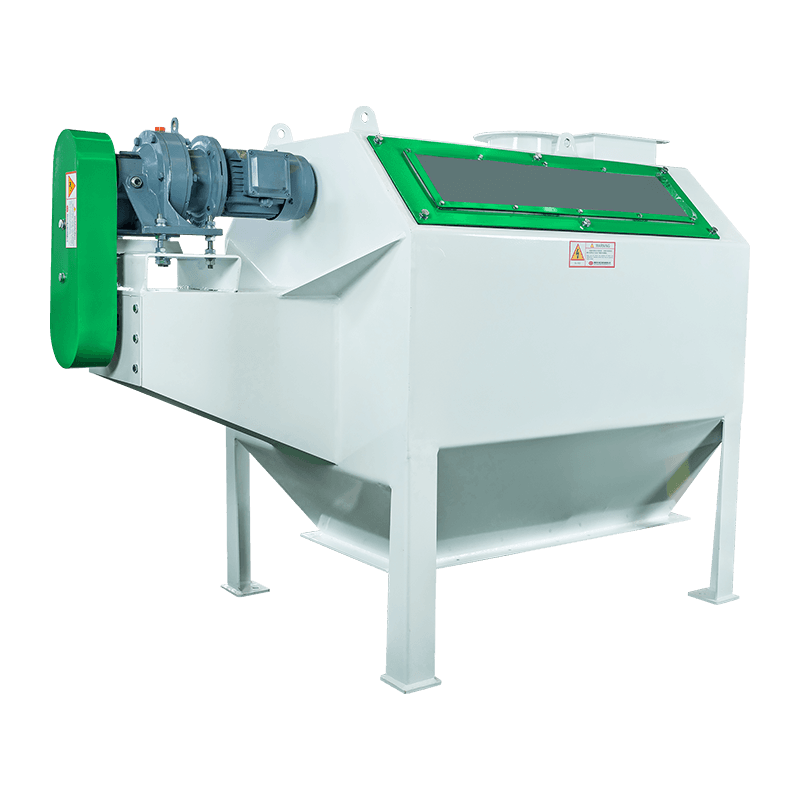 SCY Series Rotary Pre-Cleaning SieveSCY rotary pre-cleaning sieve removes coarse trash before drying, helping keep airflow open and reduce wear on downstream equipment.View Product →
Pre-cleaning before the dryer is among the cheapest efficiency upgrades available. A rotary pre-cleaning sieve strips coarse trash from the grain, keeps the airflow path open and reduces wear on downstream conveying and drying equipment.
Hot air does two jobs at once: it supplies the heat that evaporates water, and it carries the vapour away. The second job depends on absolute humidity — the mass of water vapour per kilogram of dry air — not on relative humidity alone.
That is why capacity drops at night or during a cold, damp spell. Cooler inlet air has to be heated further before it can absorb the same moisture, and more of the energy you paid for leaves in the exhaust.
Airflow per tonne sets both drying speed and the moisture gradient through the bed. Too little and the top layer stays wet while microbial risk rises; too much and heated air reaches the exhaust before releasing its heat while the bottom layer over-dries. Static pressure rises with grain depth and fines, so fans must be sized against the real bed rather than a laboratory figure.
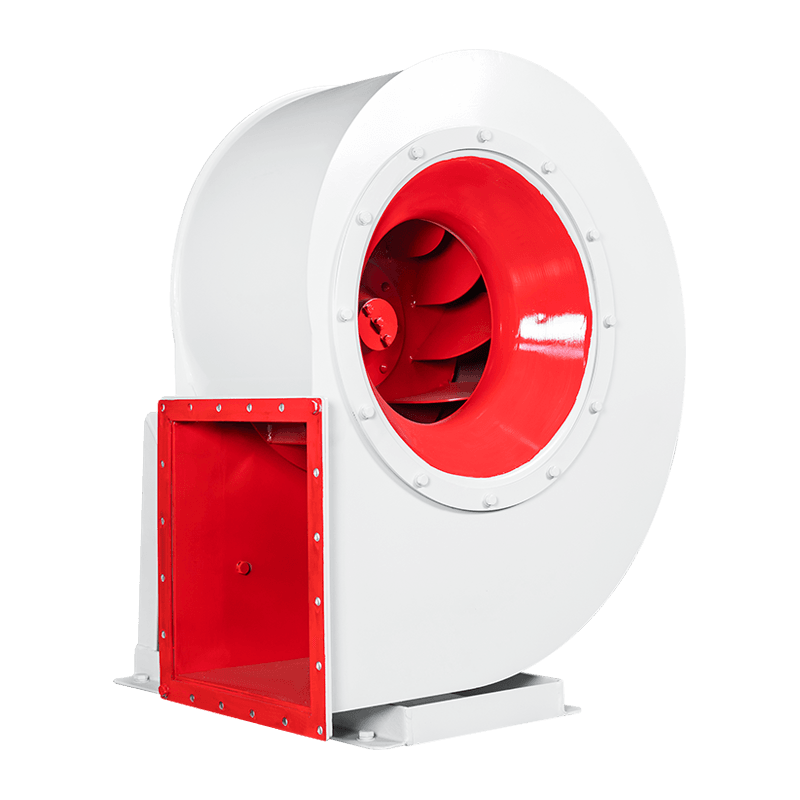 Auxiliary Fan for Feed and Grain MachineryAuxiliary fan for feed and grain machinery; page offers inquiry and quote options, useful when specifying airflow for drying lines.View Product →
Matching fan pressure to grain depth keeps the drying front moving evenly instead of stalling at one end. Airflow, heat and handling are normally balanced together at design stage; the grain drying solutions overview shows how those choices fit a complete line.
Once grain and air are fixed, the hardware decides how much of the available heat is actually used. Three design choices dominate:
Discharge rate is the operator's main lever on a continuous dryer, and it is one of the three variables behind most of the efficiency spread in field data. Faster discharge means more throughput but wetter grain; slower discharge dries more thoroughly at the cost of fuel and capacity. The workable setting meets target moisture with a narrow margin rather than a wide safety buffer.
Cooling is part of drying, not a separate step. Hot grain keeps losing moisture as it cools, and it also carries heat into the silo, where condensation on bin walls recreates exactly the storage risk the dryer was meant to remove.
Final grain temperature affects energy use as well. Field data points to roughly 2% to 6% higher energy consumption when grain is cooled below ambient before discharge, with no benefit to storability. Cool to within a few degrees of ambient, not below it.
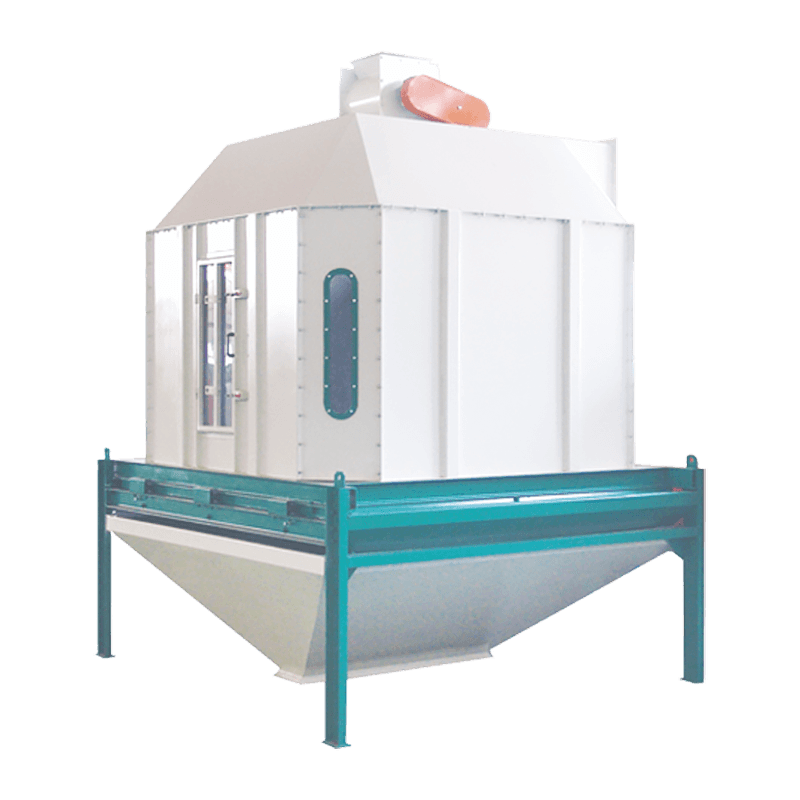 SKLN Series Counter-Flow Cooler for Feed PelletsCounter-flow cooler gently cools hot, humid pellets to about room temperature, helping avoid surface cracking and reduce energy use.View Product →
A counterflow cooler brings grain to a safe storage temperature and returns heat from the grain mass to the drying air path, so the cooling section carries part of the energy saving. Calibrate the moisture meter too, because a reading one point high pushes operators to over-dry every tonne. On larger sites, drying, cooling and bin discharge are tied into one control scheme — that is how a silo and dryer project is normally delivered.
No. Heat speeds evaporation up to a point, but it also raises exhaust losses and increases stress cracking. Seed grain and malting barley tolerate far less heat than feed grain, so the ceiling is set by the end use, not by the burner.
It depends on the drying method and grain depth. High-temperature continuous dryers need far more air per tonne than in-bin systems running low-temperature drying. Size airflow for the wettest grain you expect, then confirm the fan delivers it at the real static pressure of the bed.
Cooler, more humid air holds less capacity for water vapour. The dryer is not failing; each cubic metre of air simply carries less moisture away. Raising airflow or plenum temperature slightly, or trimming throughput, restores the balance.
On dryers running many hours a season, yes. Recovered exhaust heat cuts fuel per tonne continuously without affecting grain quality. On equipment used only a few days a year, the money is usually better spent on airflow balance and moisture control.
Drying efficiency is not a specification you buy; it is a balance you keep. Moisture load and air condition set the ceiling, dryer design decides how much of that ceiling you reach, and daily operating choices determine whether the last 5-15% is captured or wasted. Start with the water load and the air, because everything downstream depends on them.


 Previous